Planning to build your home in Cebu is one of the most significant financial decisions you will make, and getting the numbers right before you break ground saves you from costly surprises. House construction Cebu projects vary widely in cost depending on your lot location, floor area, structural system, and the materials your contractor specifies.
Why Building in Cebu Is Different From Other Philippine Cities
Cebu is not just the second-largest urban center in the Philippines — it is an island province with a geography that directly affects how you build and what you pay. Unlike Metro Manila, where materials can be sourced from multiple competing suppliers in a dense market, some Cebu locations require logistics planning that adds to your total cost. If your lot sits in a hillside subdivision in Busay, a coastal barangay in Liloan, or a mountainous area in Dalaguete, hauling costs for hollow blocks, rebar, and cement can add a meaningful percentage to your bill before a single wall goes up.
Beyond logistics, Cebu sits within a seismically active zone and experiences annual typhoon seasons. The Cebu Segment fault line and proximity to the Visayas fault system mean that structural engineering cannot be treated as an afterthought. Any contractor you hire should be designing to the National Structural Code of the Philippines (NSCP) standards, and your architectural plans must be stamped by a licensed structural engineer before the Office of the Building Official (OBO) will issue your permit.
Soil type is another Cebu-specific consideration. Reclaimed land near the South Road Properties (SRP) behaves very differently from compacted volcanic soil in Toledo or limestone-based ground in the southern towns. A proper soil investigation report guides your foundation design and prevents long-term structural problems.
Choosing a firm that understands all of these local variables is critical, as Gas Design & Build has spent over a decade working across Cebu's varied terrain and urban pockets, and their home construction in Cebu service is built around that accumulated site-level knowledge.
What Drives the Cost of House Construction in Cebu
Understanding cost drivers gives you control over your budget before you ever sign a contract. The following factors have the most significant influence on your final bill.
Floor area. Construction cost is typically calculated per square meter. The larger the footprint and the more stories you add, the more material and labor you need. A 60 sqm single-story bungalow and a 200 sqm two-story home are in completely different budget categories.
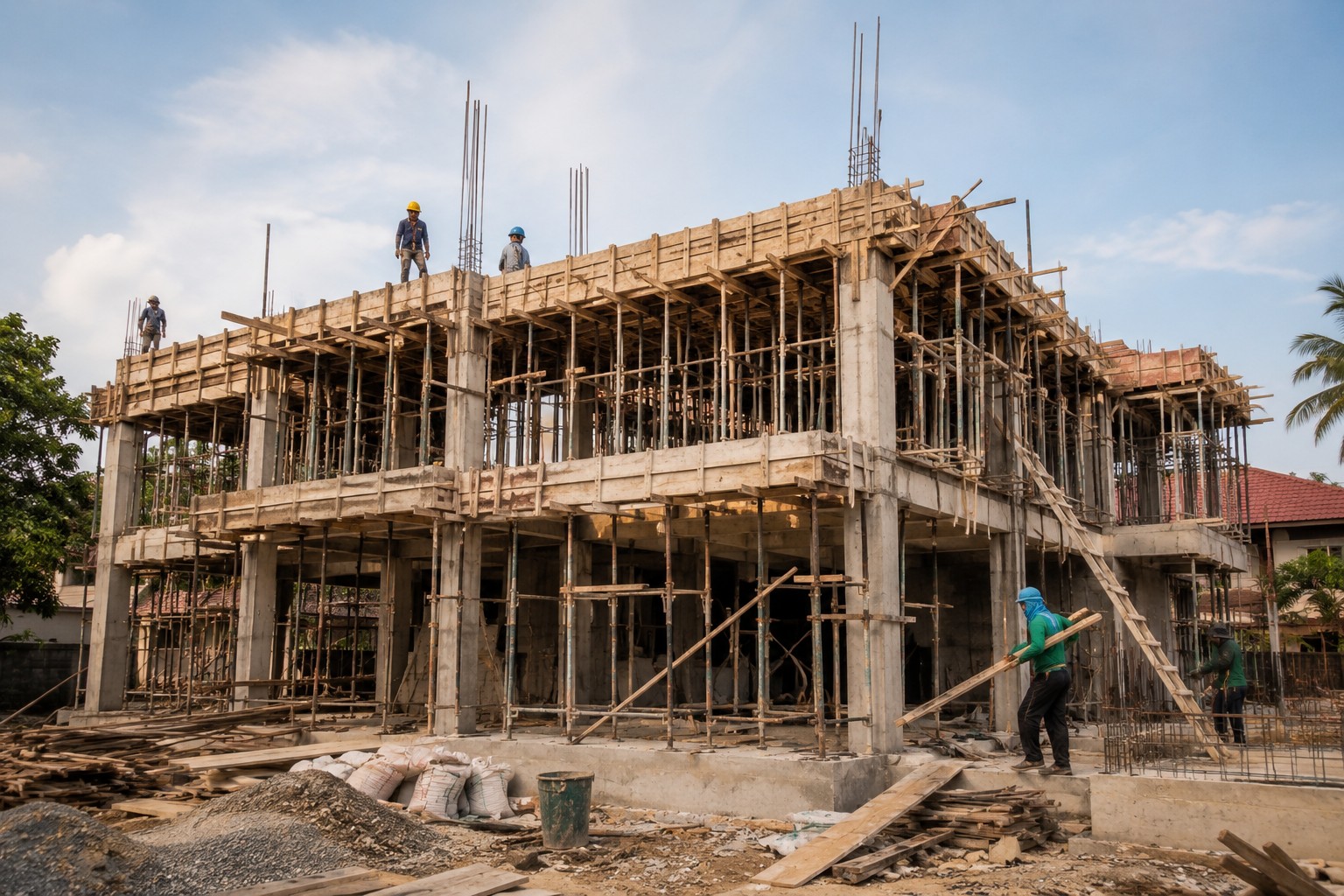
Structural system. The two most common systems in Cebu are the Cast-in-Place Concrete System (locally called "Buhos") and the Conventional Hollow Block System. Buhos involves pouring concrete into formwork on-site for walls, slabs, and beams. It creates a monolithic, reinforced structure that performs well against both earthquakes and typhoon winds. It is typically more expensive upfront, but the long-term durability and reduced maintenance costs make it a preferred choice for permanent family homes. The hollow block system is more common for smaller budgets but requires skilled labor and proper reinforcement to meet code.
Finish level. A bare finish (walls plastered, floor screeded, no tiles or fixtures) is the entry-level cost tier. Economy finish adds basic tiles, standard door frames, and minimal electrical and plumbing fixtures. Semi-custom and full custom finishes can double or triple your per-sqm cost depending on the materials specified.
Design complexity. Simple rectangular floor plans are cheaper to build than L-shaped, split-level, or curved designs. Each additional corner, cantilever, or architectural feature adds formwork complexity, labor time, and material waste.
Accessibility. If your lot is in a narrow alley, a steep hillside, or an area without road access wide enough for a concrete mixer truck, expect surcharges.
| Cost Tier | Estimated Range per sqm | Typical Finish Level |
|---|---|---|
| Economy | ₱15,000 to ₱20,000 | Bare to basic finish |
| Standard | ₱20,000 to ₱30,000 | Economy to mid-range finish |
| Semi-Custom | ₱30,000 to ₱45,000 | Mid-range to quality finish |
| Full Custom / Luxury | ₱45,000 and above | High-end materials, complex design |
_Note: These ranges reflect 2026 Cebu market estimates for cast-in-place or reinforced masonry construction. Confirm current rates with your chosen contractor._
The Cast-in-Place Concrete System: Why It Dominates Quality Builds in Cebu
The Cast-in-Place (Buhos) system earns its reputation in typhoon-prone, earthquake-active regions like Cebu. When concrete is poured continuously into reinforced formwork, it bonds structural elements into a single unit rather than assembling separate components. This monolithic behavior means the structure distributes lateral forces from wind and seismic activity more efficiently than a block-by-block system.
For homeowners in Cebu, this is not an abstract engineering point. The 2013 earthquake that struck Bohol and affected parts of Cebu caused significant damage to improperly constructed masonry buildings, while properly engineered cast-in-place structures fared considerably better. Investing in the right structural system at the start protects your family and preserves your asset value over decades.
The trade-off is cost and timeline. Buhos requires more formwork, more concrete volume, and experienced supervisory labor. However, for a permanent home in Cebu, the engineering logic is sound. Gas Design & Build incorporates earthquake-resistant engineering into every project by design, not as an optional add-on.
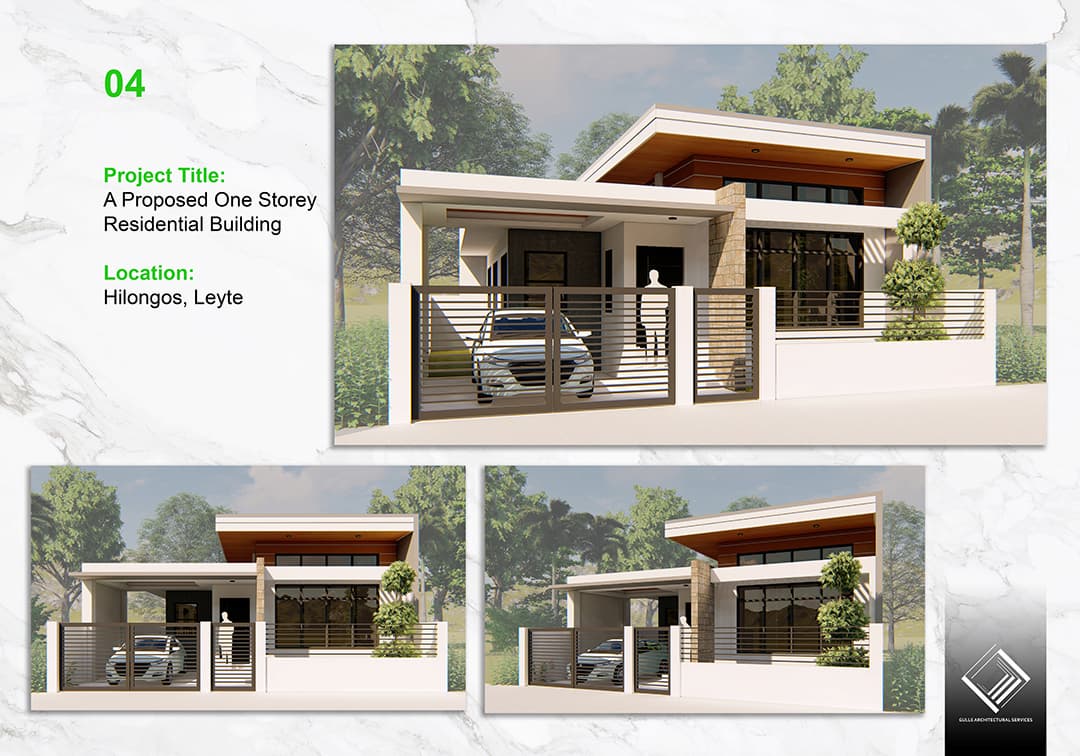
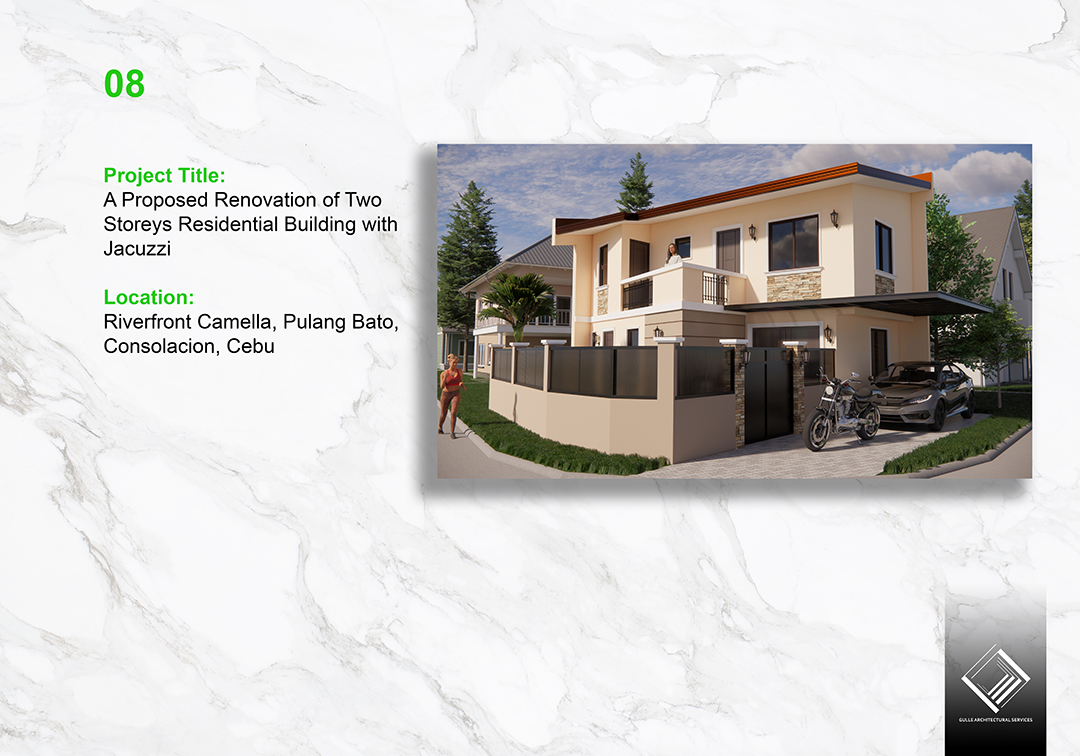
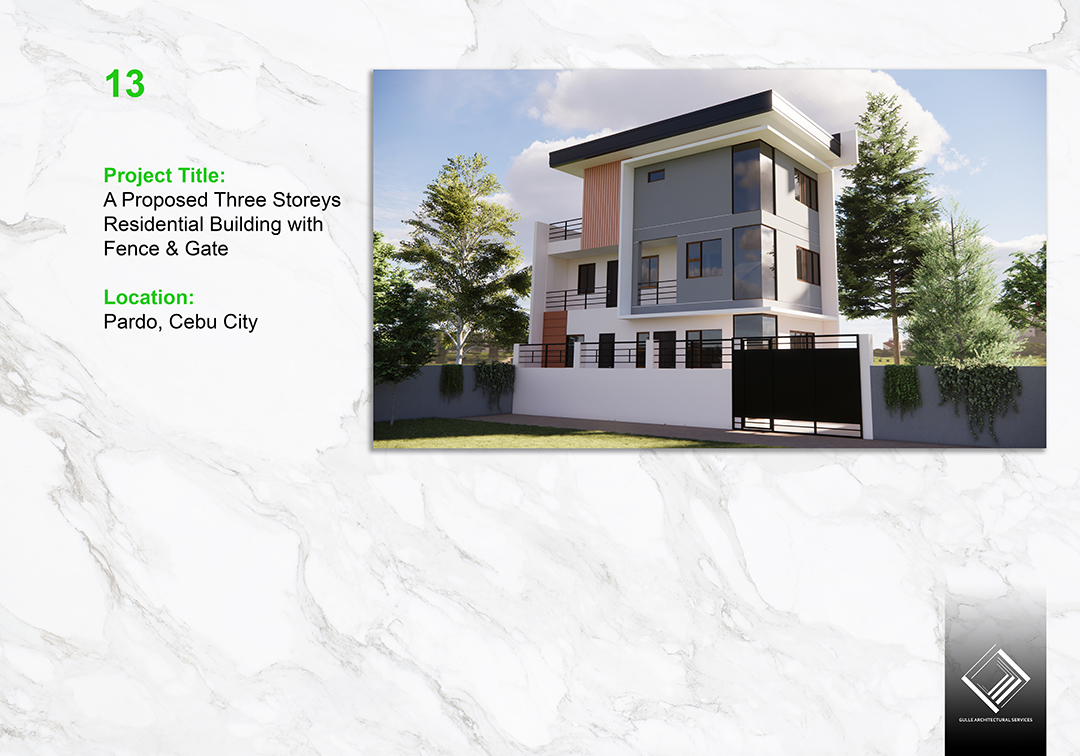
Before you commit to any structural approach, it helps to see what a finished product looks like, and browsing the firm's portfolio gives you a realistic view of completed projects across different scales and budgets.
What Your Construction Quote Typically Includes and Excludes
One of the most common budgeting mistakes Filipino homeowners make is treating a contractor's quoted price as the total project cost. A detailed scope breakdown prevents this.
Commonly included in a standard construction contract:
- Structural works: foundation, columns, beams, slabs, and roof framing
- Masonry walls (interior and exterior)
- Roofing system (materials specified in contract)
- Basic electrical rough-in and outlets (as per approved electrical plan)
- Basic plumbing rough-in, drainage, and fixtures (economy grade)
- Plastering and skim coating for interior walls
- Painting (typically two coats interior, one exterior)
- Standard door and window frames with basic hardware
Commonly excluded from the base contract price:
- Lot acquisition and title transfer costs
- Soil investigation or geotechnical report fees
- Building permit fees and professional regulation fees
- Architectural and engineering design fees (if charged separately)
- Landscaping and perimeter fence
- Generator, solar panel system, or CCTV
- Furniture, appliances, and custom cabinetry
- Water and electricity connection fees from MCWD or your local utility
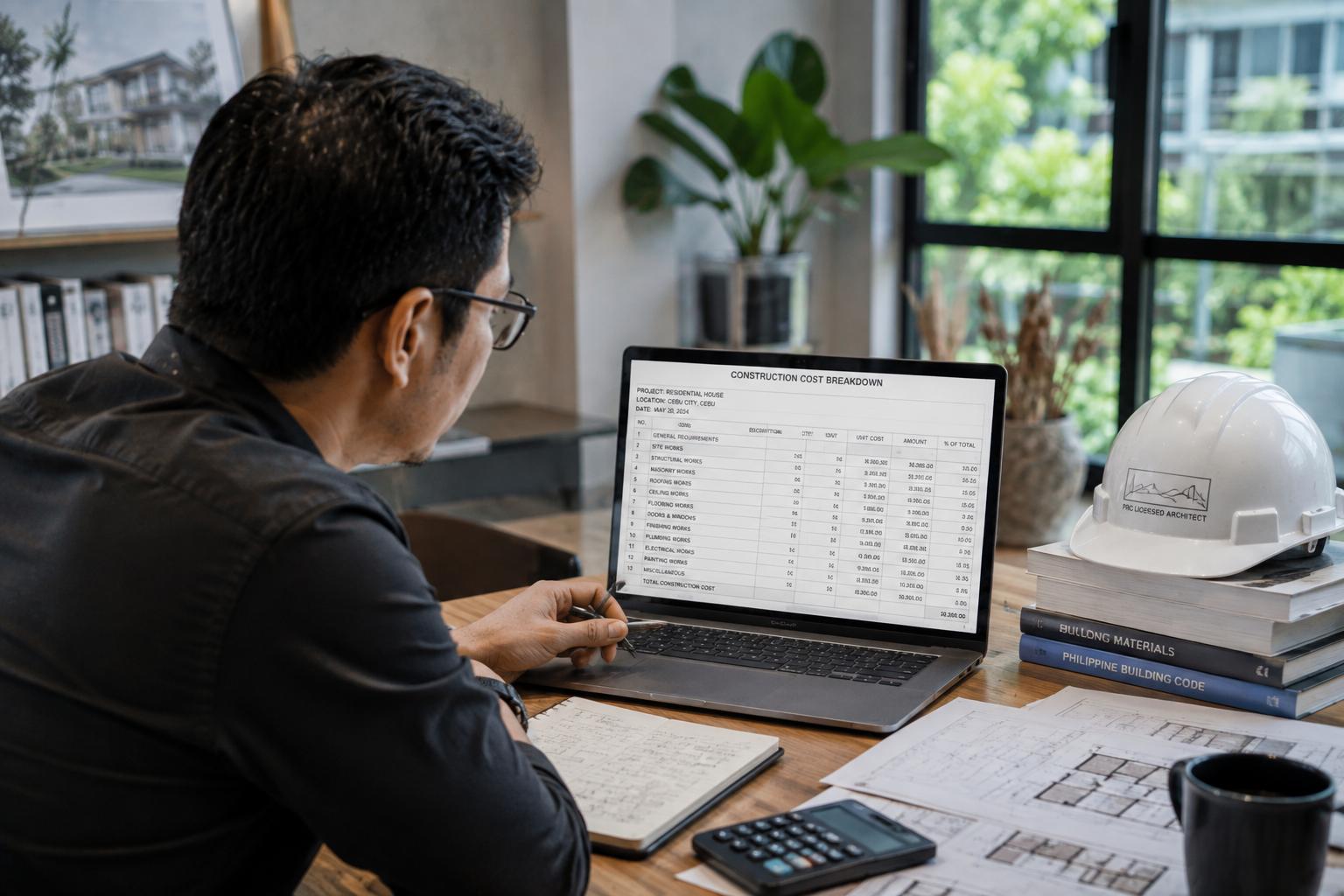
Always request a detailed Bill of Quantities (BOQ) before signing. A transparent contractor will show you line items. If a quote arrives as a single lump sum with no breakdown, ask for the BOQ or walk away.
Gas Design & Build operates on an integrated design-and-build model, meaning one team handles architectural design, structural engineering, permit processing, 3d architectural visualization, and construction, which eliminates the gap between what your architect drew and what your contractor actually builds.
Why Young Filipino Homebuyers Should Prioritize Building in Cebu Now
Property values in Cebu's key growth corridors — including Mandaue, Consolacion, Talisay, and Minglanilla — have been rising steadily as the Metro Cebu area expands. For millennial and Gen Z buyers currently renting in Cebu City or Mandaue, the mathematics of building versus renting shifts meaningfully in favor of ownership when you factor in equity accumulation, the ability to design to your lifestyle, and long-term shelter security.
Building rather than buying a pre-selling condominium unit gives you control over materials, spatial layout, and structural quality. You are not buying what a developer's cost-cutting budget allowed. You are building what your family actually needs on land you own.
Financing is accessible. The Home Development Mutual Fund (Pag-IBIG) offers housing loans for construction on land you own, and the Social Security System (SSS) has a similar program. BDO, BPI, and Security Bank all offer construction-to-permanent mortgage products for qualified borrowers in Cebu. A realistic budget aligned with your loanable amount and equity is the starting point for any serious planning conversation.
You can explore the full range of services that Gas Design & Build offers to understand how design fees, structural engineering, and construction management are packaged together for homeowners in this situation.
How to Choose the Right Contractor for Your Cebu Home
Contractor selection is where many Philippine homeowners make their biggest mistake: choosing the lowest bidder without validating qualifications. In Cebu, your contractor must hold a valid contractor's license from the Philippine Contractors Accreditation Board (PCAB). Without this, your contract has no legal standing and your building permit application may be rejected by the OBO.
Beyond licensing, look for the following:
- Track record in Cebu specifically. Local experience means the contractor understands Cebu soil conditions, local supplier networks, and the OBO's specific permitting requirements.
- In-house structural engineer. Whoever you hire should have a licensed structural engineer involved in design, not just a draftsperson producing plans.
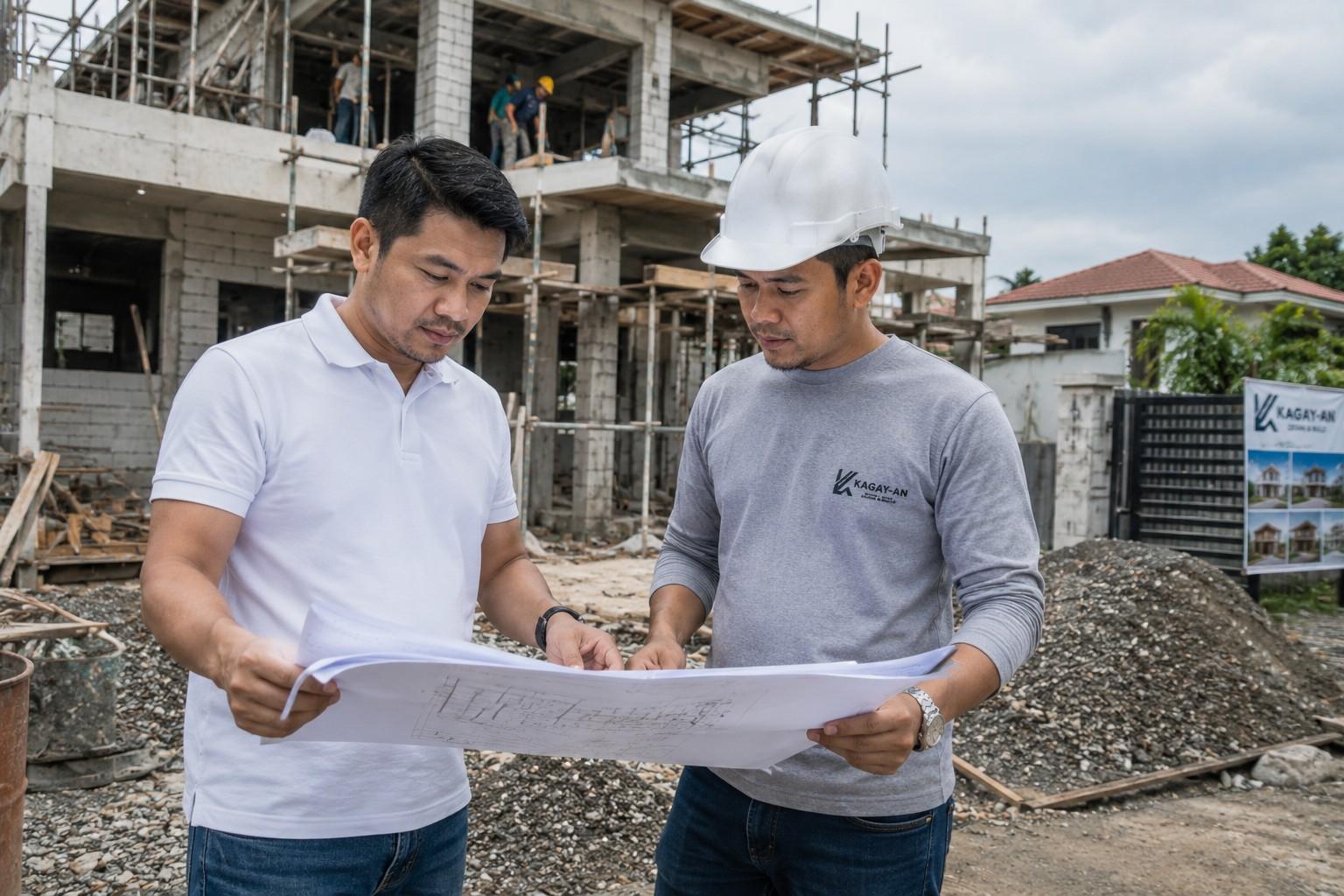
- Transparent documentation. A legitimate contractor provides a detailed BOQ, a construction timeline with milestones, and a payment schedule tied to deliverables — not arbitrary dates.
- Communication process. Ask how they handle design changes mid-construction and what the variation order process looks like.
- Portfolio of completed work. Request to visit completed projects or at minimum see photographic documentation with references you can call.
Gas Design & Build's integrated approach addresses all of these points, as their licensed team handles architectural design and structural engineering under one roof, and to learn more about the firm's background and credentials, visit their about page.
Construction Timelines: What to Expect for a Standard Cebu Home
Timeline expectations are something the competitor landscape almost never addresses clearly. Here is a realistic breakdown for a standard single-family home in Cebu:
| Phase | Estimated Duration |
|---|---|
| Design and permitting | 6 to 12 weeks |
| Foundation and substructure | 4 to 6 weeks |
| Structural works (columns, beams, slabs) | 8 to 14 weeks |
| Masonry and roofing | 4 to 6 weeks |
| Rough-in MEP (mechanical, electrical, plumbing) | 3 to 5 weeks |
| Finishing works (tiles, painting, doors, fixtures) | 6 to 10 weeks |
| Punch list and handover | 1 to 2 weeks |
A standard 80 to 150 sqm home in Cebu typically takes 7 to 12 months from design completion to handover, depending on weather, permit processing speed, and material delivery lead times. Rainy season (June through October) can slow exterior works. Planning your groundbreaking for the dry months gives your structural works the best curing conditions.
Permits and Legal Documents Required Before You Build
The Office of the Building Official (OBO) in your municipality or city requires a complete set of documents before issuing a Building Permit. These typically include your architectural plans, structural plans and design analysis, electrical plans, sanitary and plumbing plans, and mechanical plans where applicable. You will also need proof of lot ownership (Transfer Certificate of Title), a tax declaration, and a barangay clearance.
Your contractor or design firm can assist with permit processing, but understand that fees vary by location. Cebu City OBO has different schedules from Lapu-Lapu City, Mandaue, or the municipalities. Factor permit fees into your budget from the start — they are non-negotiable and non-skippable. Building without a permit exposes you to demolition orders and fines under the National Building Code of the Philippines (PD 1096).
Things to Know
- The Cast-in-Place (Buhos) concrete system costs more upfront but delivers superior typhoon and earthquake resistance, making it the structurally sound choice for permanent homes in Cebu's seismically active environment.
- Permit fees, soil investigation reports, and professional design fees are almost always excluded from a contractor's base construction quote — budget an additional 10 to 15 percent of your total project cost to cover these items.
- Cebu's varied geography means logistics costs differ significantly across locations: lots in hillside subdivisions, coastal barangays, or areas without wide road access can attract hauling and equipment surcharges that raise your per-sqm cost noticeably.
- Pag-IBIG Fund offers a housing loan program specifically for construction on land you already own — this is a frequently overlooked financing option that offers lower interest rates than most commercial bank products and is accessible to both employed and self-employed members.
- A valid PCAB (Philippine Contractors Accreditation Board) license is a non-negotiable requirement for your contractor; hiring an unlicensed builder means your building permit application may be rejected by the OBO and your construction contract carries no legal protection.
- The finish level you choose — bare, economy, standard, or full custom — has as much impact on your final cost as your floor area does, so lock in your specifications before signing any contract to avoid scope creep and variation order disputes mid-build.
Frequently Asked Questions
Q: How much does it cost to build a house in Cebu, Philippines?
The cost to build a house in Cebu generally ranges from ₱15,000 to ₱45,000 or more per square meter, depending on your structural system, finish level, lot location, and design complexity.
A modest 60 sqm single-story home at economy finish could land between ₱900,000 and ₱1,200,000 for construction costs alone, while a 150 sqm two-story home with mid-range finishes and a cast-in-place structural system could run from ₱3,000,000 to ₱6,750,000 or higher. These figures cover construction only and do not include lot cost, design fees, permit fees, or utility connection charges. Getting a detailed Bill of Quantities from a licensed contractor is the only reliable way to pin down your specific project cost.
Q: How much per sqm to build a house in the Philippines in 2026?
In 2026, building a house in the Philippines costs roughly ₱15,000 to ₱20,000 per sqm at economy level, ₱20,000 to ₱35,000 per sqm at standard level, and ₱35,000 to ₱60,000 or more per sqm for full custom or high-end builds.
These ranges apply broadly across the Philippines, but Cebu-specific costs may sit slightly higher than provincial averages due to material logistics, local labor rates, and the structural requirements imposed by the region's seismic and typhoon exposure. Urban Cebu locations such as Cebu City and Mandaue typically run at the middle to upper end of regional ranges, while more accessible suburban lots in Consolacion or Minglanilla may offer modest savings on logistics. Always request 2026-dated quotations from at least two or three licensed contractors before committing to any figure.
Q: Is 2 million pesos enough to build a house?
Yes, ₱2,000,000 can be enough to build a functional, code-compliant home in Cebu, but your floor area and finish level will need to be carefully calibrated to that budget.
At a standard rate of ₱20,000 per sqm, a ₱2,000,000 construction budget covers approximately 100 sqm at an economy to basic standard finish — enough for a comfortable two-bedroom or three-bedroom single-story home if the design is efficient. However, this figure must be treated as the construction contract value only. Permit fees, design fees, soil testing, and utility connections are additional costs that can add ₱150,000 to ₱400,000 or more depending on your municipality. If your ₱2,000,000 is your total available budget, design your home closer to 70 to 80 sqm to leave room for those unavoidable add-ons.
Q: How much does it cost to build a 100 sqm house in the Philippines?
A 100 sqm house in the Philippines costs between ₱1,500,000 and ₱4,500,000 or more in 2026, depending on structural system, location, and finish specifications.
At the economy end using conventional masonry, ₱1,500,000 to ₱2,000,000 covers a basic finish with standard doors, minimal tile work, and economy-grade fixtures. At the standard to semi-custom level using a cast-in-place concrete system with quality tile flooring, finished ceilings, and mid-range kitchen and bathroom fixtures, expect ₱2,500,000 to ₱3,500,000. Full custom builds with imported tiles, custom cabinetry, and architectural detailing can push well beyond ₱4,500,000 for the same 100 sqm footprint. In Cebu specifically, structural requirements for typhoon and earthquake resistance often push competent contractors toward the middle and upper ranges even for modest homes.
Q: Can I build a house for 300k in the Philippines?
Building a permanent, code-compliant house for ₱300,000 is not realistically achievable in Cebu or most urban Philippine locations in 2026, given current material and labor costs.
At current rates, ₱300,000 covers roughly 15 to 20 sqm of economy construction — insufficient for a habitable home by most practical and regulatory standards. That said, ₱300,000 can serve as a meaningful down payment or equity contribution toward a Pag-IBIG construction loan, which can finance the remaining balance over a fixed term at competitive rates. Some rural municipalities in the Philippines have seen very modest structures built at lower cost using indigenous or alternative materials, but these are not engineered to the NSCP standards required for building permits in Cebu. If ₱300,000 is your starting point, the practical path forward is to treat it as seed funding and consult a licensed contractor about phased construction or financing options that make your project viable.
The Bottom Line on House Construction in Cebu
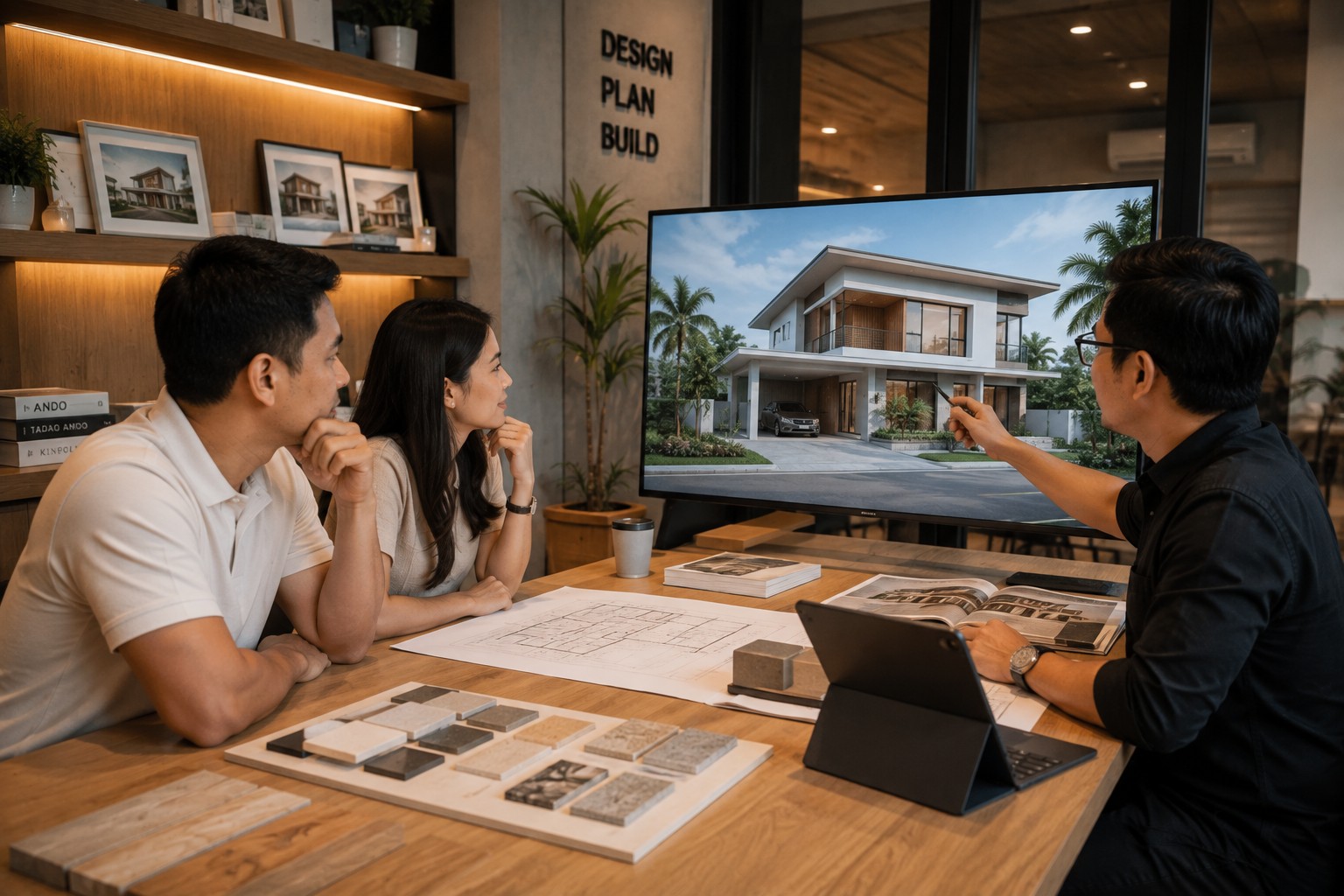
House construction in Cebu rewards homeowners who plan carefully, choose licensed professionals, and understand exactly what their budget covers before a single cubic meter of concrete is poured. The variables — soil conditions, structural system, finish level, logistics, and permit costs — interact in ways that can push a project significantly over budget if they are not accounted for upfront. Working with a firm that integrates design, engineering, visualization, and construction under one accountable team removes the most common source of cost blowouts: the gap between what was designed and what was actually built.
Gas Design & Build brings over a decade of on-the-ground experience in Cebu's residential and commercial construction landscape, combining contemporary tropical minimalism with the structural engineering standards your home genuinely needs, and by visiting Gas Design & Build you can take the first step toward connecting with a team that understands Cebu's unique building environment. Whether you are planning a modest starter home in a suburban Cebu municipality or a full custom build in the city, the right starting point is a detailed consultation with a team that can show you real numbers, real timelines, and real completed projects. Reach out to Gas Design & Build to schedule your initial design and budgeting consultation and take the first concrete step toward the home you have been planning.