Architecture & House Design Cebu
Custom architectural master planning and modern house design tailored to Cebu's climate & topography.
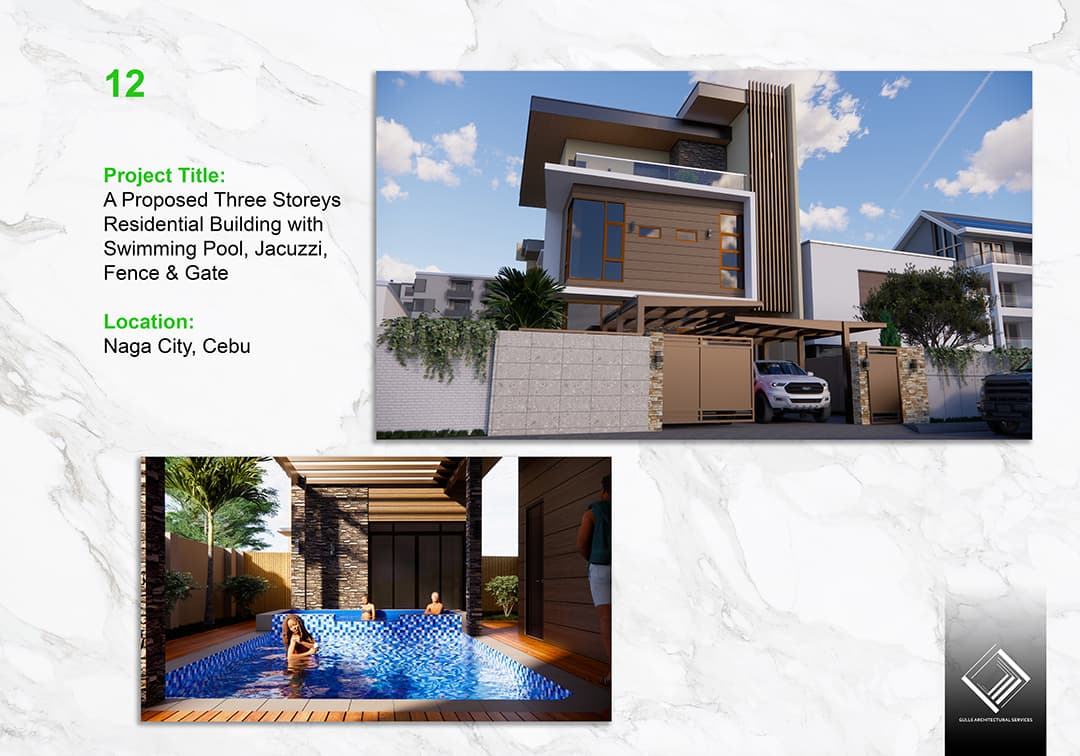
Detailed Overview — Cebu Design & Build by GAS
Key Capabilities & Deliverables
- Architectural Layouts & Floor Plan Optimization
- Structural, Electrical, Sanitary & Plumbing Blueprints
- Subdivision HOA & Building Permit Processing in Cebu City, Mandaue & Lapu-Lapu
- Passive Solar Design & Natural Ventilation Strategies
- Site Elevation Analysis for Hillside/Slope Properties in Cebu
Why Partner with Gas Design & Build?
Local Building Code Expertise
Fast-tracked permit approval with Cebu City Hall, Mandaue OBO, and Lapu-Lapu engineering offices.
Climate-Resilient Engineering
Structures designed to withstand typhoon winds, seismic activity, and tropical humidity.
End-to-End Synergy
Seamless transition from blueprint planning directly into turnkey construction.
How We Execute Architecture & House Design Cebu
Our structured 3-phase methodology for Cebu properties
We evaluate property boundaries, sun path, wind flow, and slope in Cebu.
Developing space layouts and spatial flow customized to your lifestyle.
Signed and sealed architectural and engineering plans for construction.
Frequently Asked Questions — Architecture & House Design Cebu
Do you design houses for hillside lots like Busay or Maria Luisa?
Yes! We specialize in sloping site architecture and retaining wall engineering tailored to Cebu's elevated residential developments.
Can I request design changes during the blueprint phase?
Absolutely. We offer 3 design revision cycles during the schematic phase to ensure complete alignment with your vision.
What are the five main types of architectural design?
The five main types of architectural design are: (1) Residential architecture — houses, apartments, and condominiums; (2) Commercial architecture — offices, retail, and mixed-use buildings; (3) Institutional architecture — schools, hospitals, and government facilities; (4) Industrial architecture — factories, warehouses, and logistics centers; and (5) Landscape architecture — outdoor spaces, parks, and resort environments. Gas Design & Build specializes in residential and commercial architecture across Cebu, with expertise in landscape and pool design as an integrated service.
What are the steps involved in house construction in the Philippines?
House construction in the Philippines typically follows these steps: (1) site inspection and design brief, (2) architectural design and 3D visualization, (3) working drawings and engineering plans, (4) building permit processing with the local Office of the Building Official, (5) site excavation and foundation works, (6) structural framing — columns, beams, and slabs, (7) roofing installation, (8) MEP rough-in — electrical, plumbing, and sanitary, (9) interior and exterior finishing, and (10) final inspection, snagging, and handover. Gas Design & Build manages every step under one contract for a seamless build.
What are the key elements of Filipino architecture design?
Key elements of Filipino architecture design include passive cooling through high ceilings, large windows, and cross-ventilation suited to the tropical climate; the use of indigenous materials like bamboo, narra, and capiz; elevated floors and wide eaves (overhangs) for flood protection and sun shading; open-air layouts with lanais and verandas that blur indoor-outdoor boundaries; and adaptive resilience against typhoons and seismic activity. Modern Filipino architecture blends these traditional principles with contemporary minimalist aesthetics — exactly the approach our Cebu architects take in every design.
What are some famous architecture structures in Cebu City?
Cebu City is home to several iconic architectural landmarks, including the Magellan's Cross Pavilion, Basilica Minore del Santo Niño, Cebu Metropolitan Cathedral, Fort San Pedro (the oldest triangular bastion fort in the country), the Heritage of Cebu Monument, and modern structures like the Cebu IT Park towers and SM Seaside City Cebu. These structures reflect Cebu's rich blend of Spanish colonial, pre-war, and contemporary architecture — a heritage that inspires our contextual, climate-responsive designs for modern Cebu homes and commercial buildings.